

ENTERPRISE DECISION ENGINE (EDE)
UX: 0 → 1 PRODUCT DESIGN
Note: This case study reflects my personal UX contributions and leadership. Details have been intentionally abstracted to protect client confidentiality.
Client: Comcast
Timeline: April 2024 – Present
Role: UX Designer / Design Lead (0 to 1 Enterprise Platform)
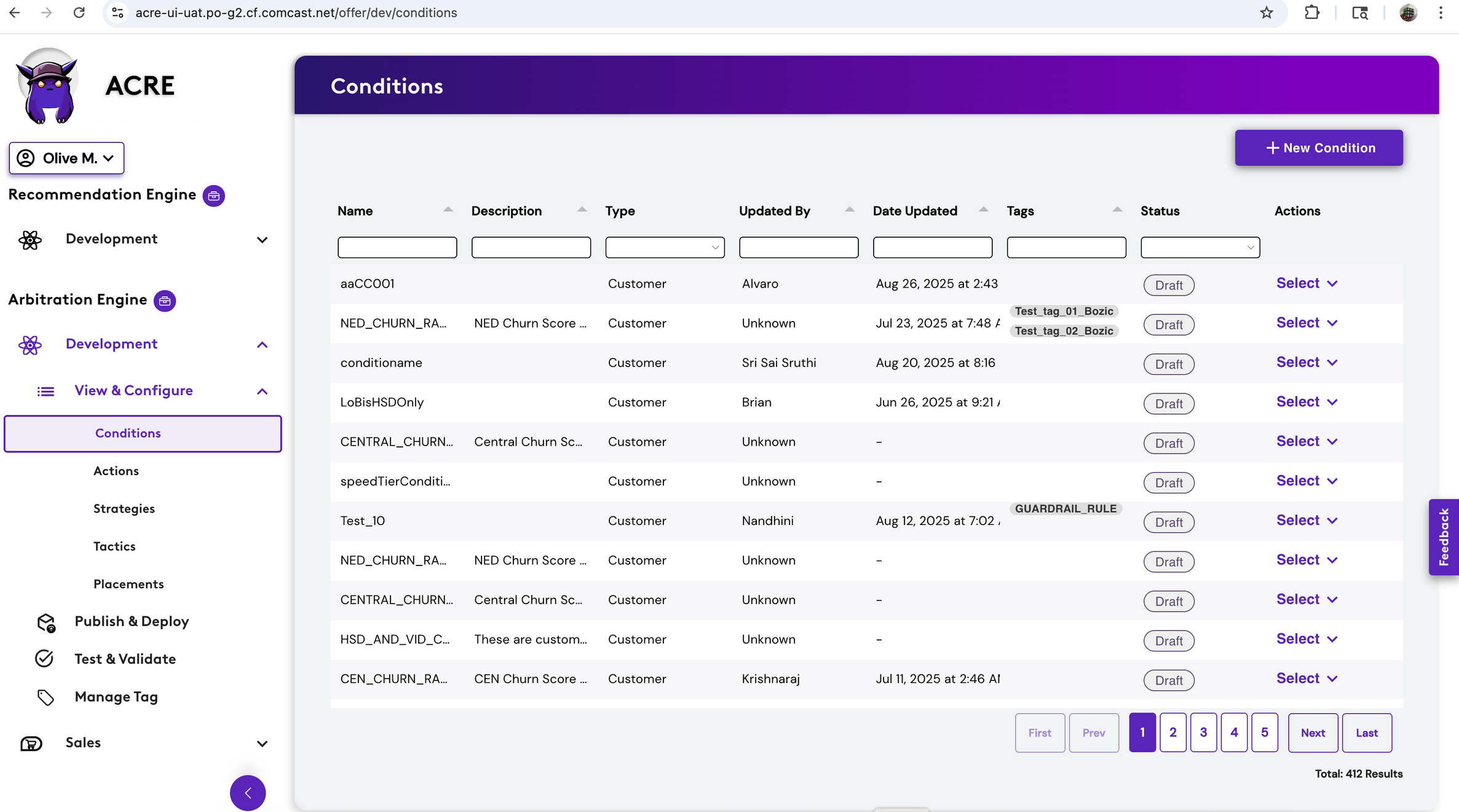
Condition List View Page developed and live
CHALLENGE
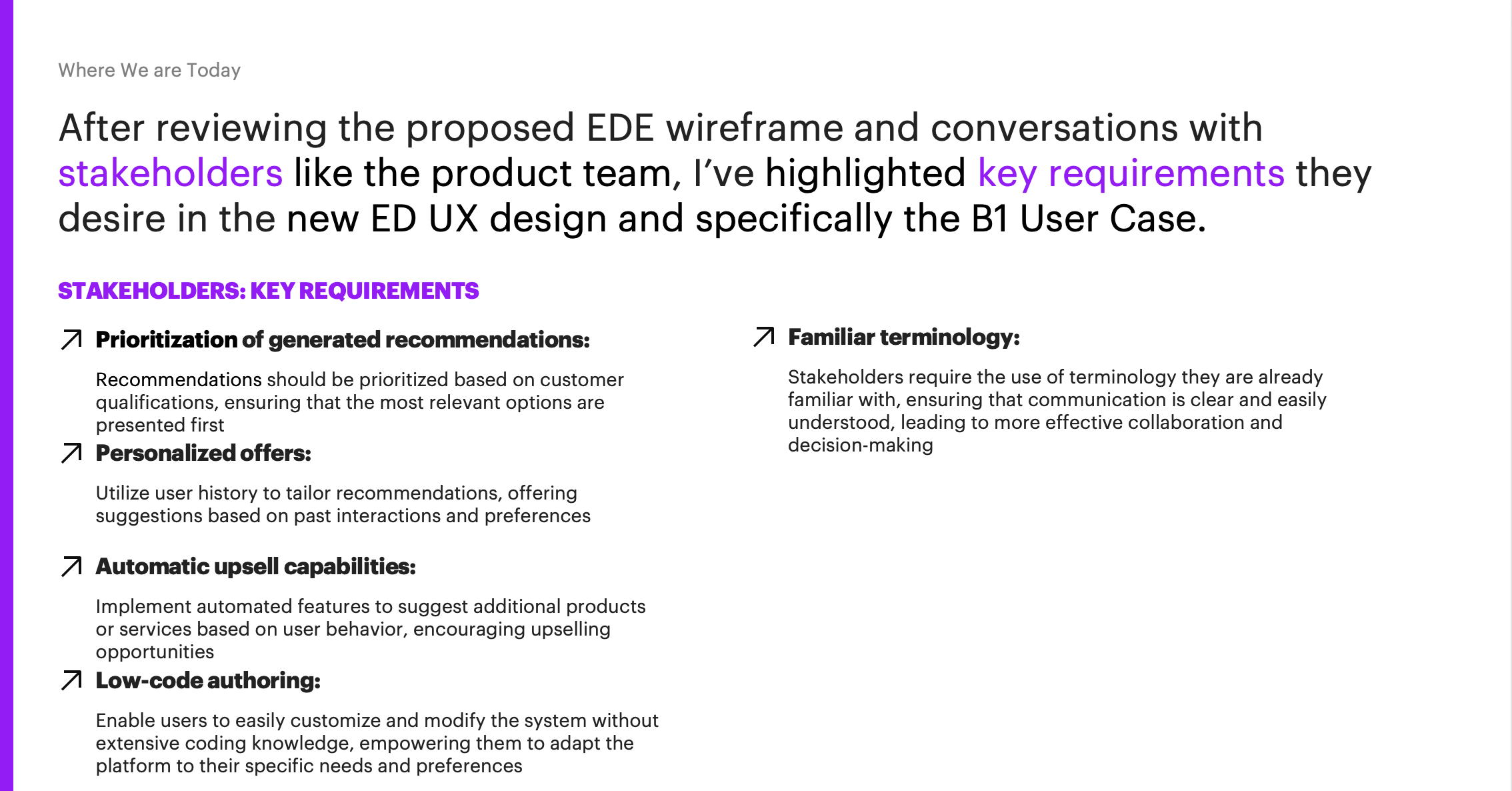
Comcast was developing a net-new Enterprise Decision Engine (EDE) to power recommendation logic across channels. While the system leveraged ACRE UI components, there was no defined EDE product experience, no scalable authoring workflows, and no shared mental model for how users should create, test, and deploy decision logic.
As adoption increased, users surfaced critical friction points that threatened scalability:
Deployment workflows tied to a single user
Slow performance and frequent timeouts
Rigid, multi-step packaging flows
Navigation patterns that blocked parallel work
Limited onboarding and in-context support
The challenge was to define the first EDE UX from scratch, while simultaneously evolving it based on live enterprise user feedback.
RESEARCH & CONTINUOUS FEEDBACK
Methods
Builder, everyday user, and stakeholder interviews
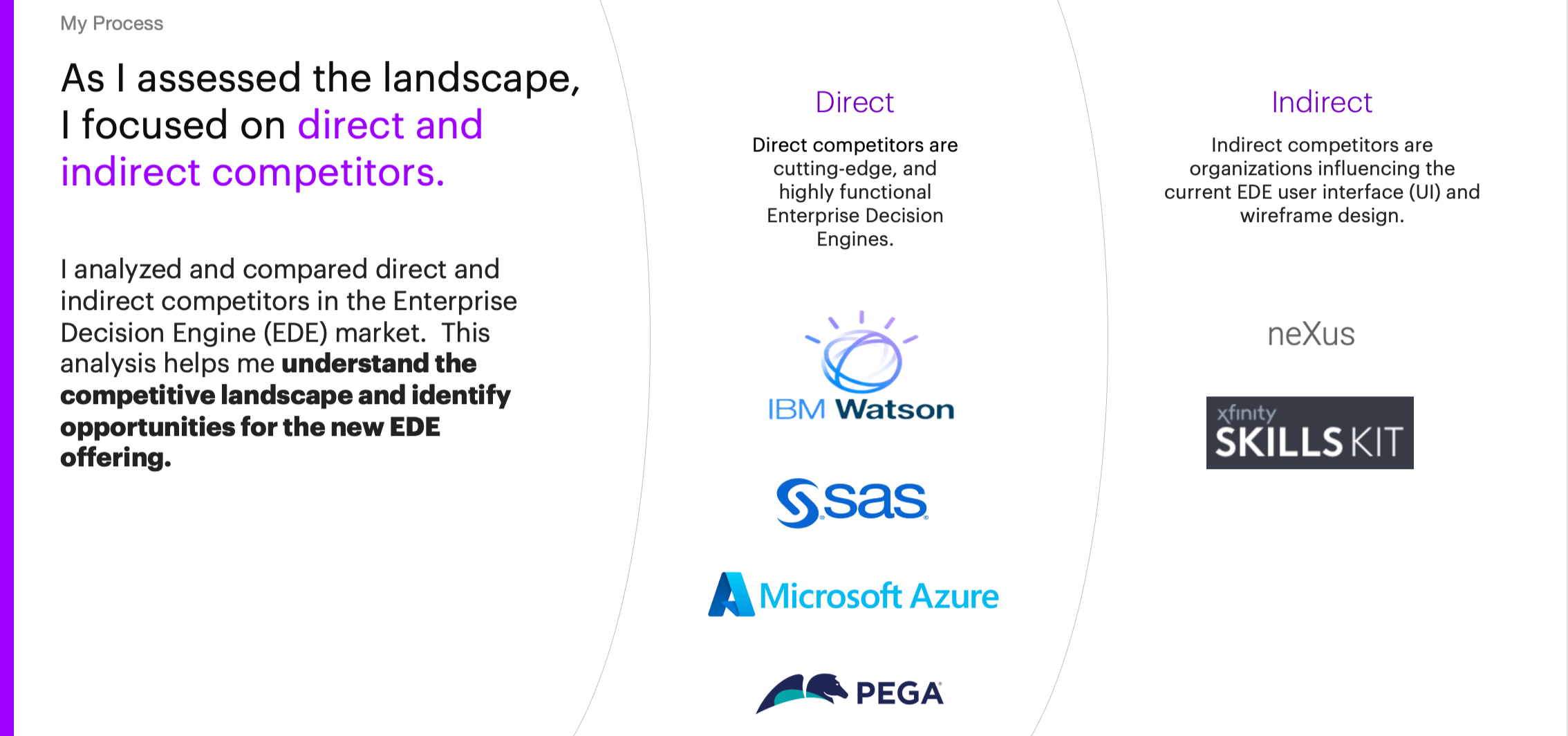
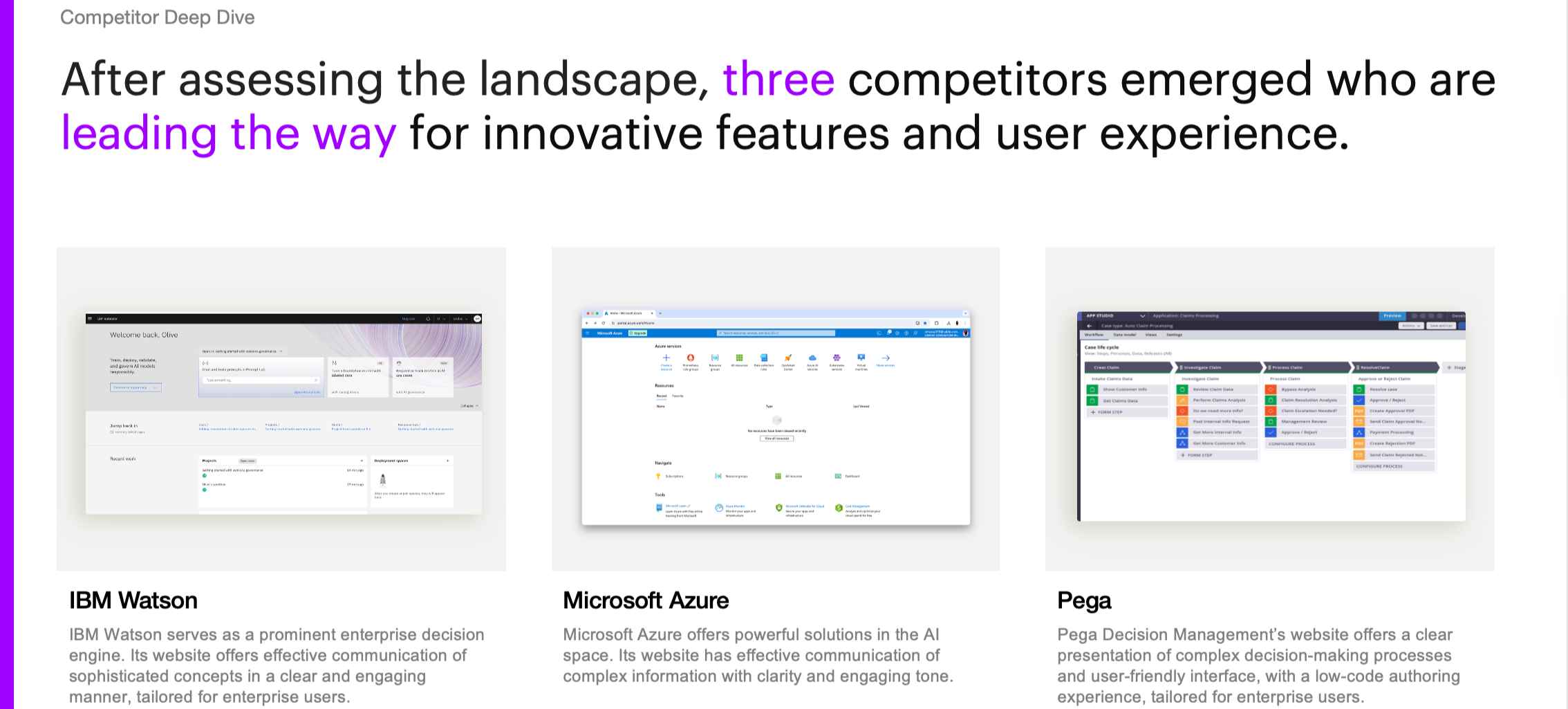
Competative audit
Unmoderated usability studies
Ongoing qualitative feedback collection
Workflow and system analysis across multiple workstreams
This approach allowed the EDE UX to evolve from initial definition → validated enterprise system.
USER-VALIDATED PAIN POINTS
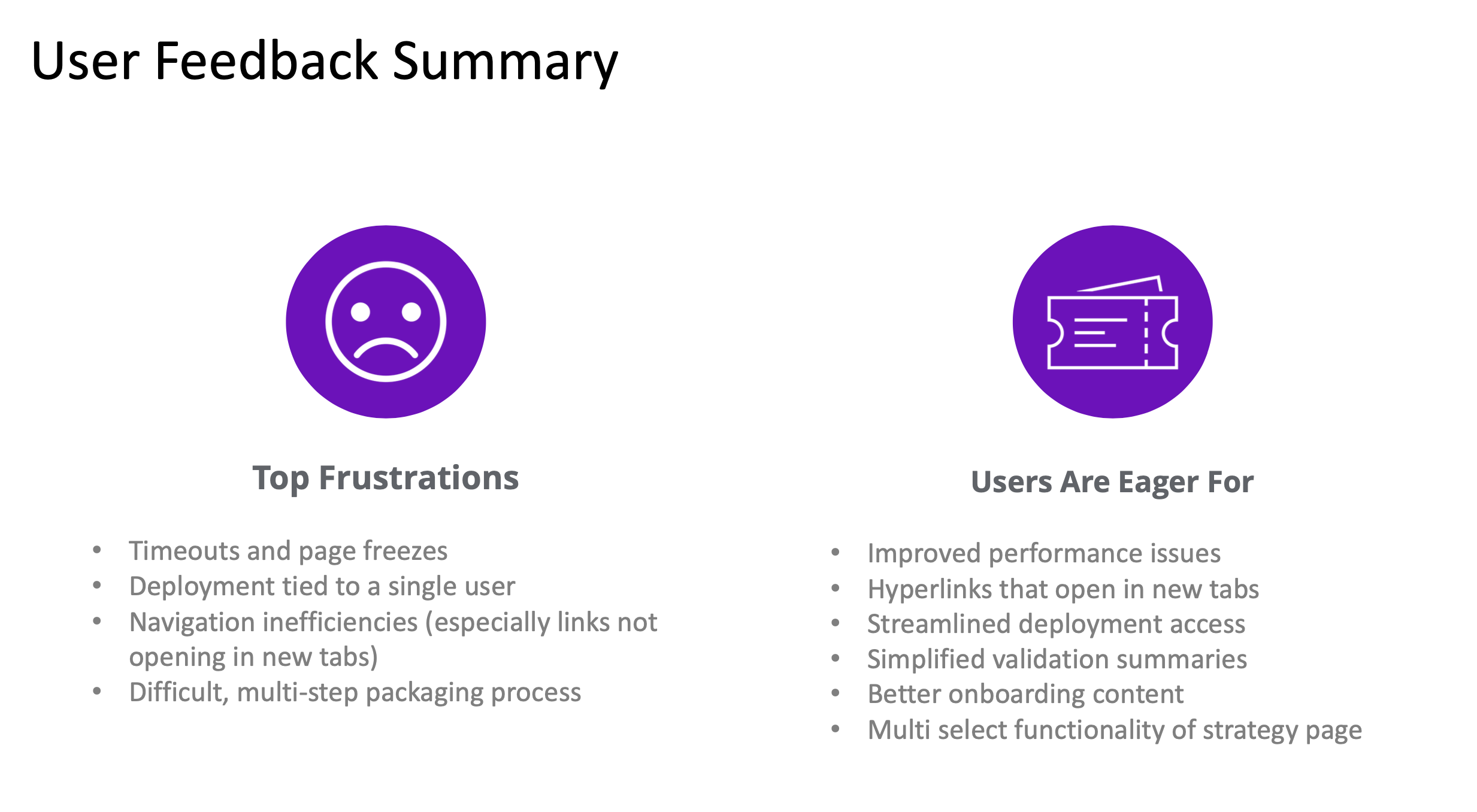
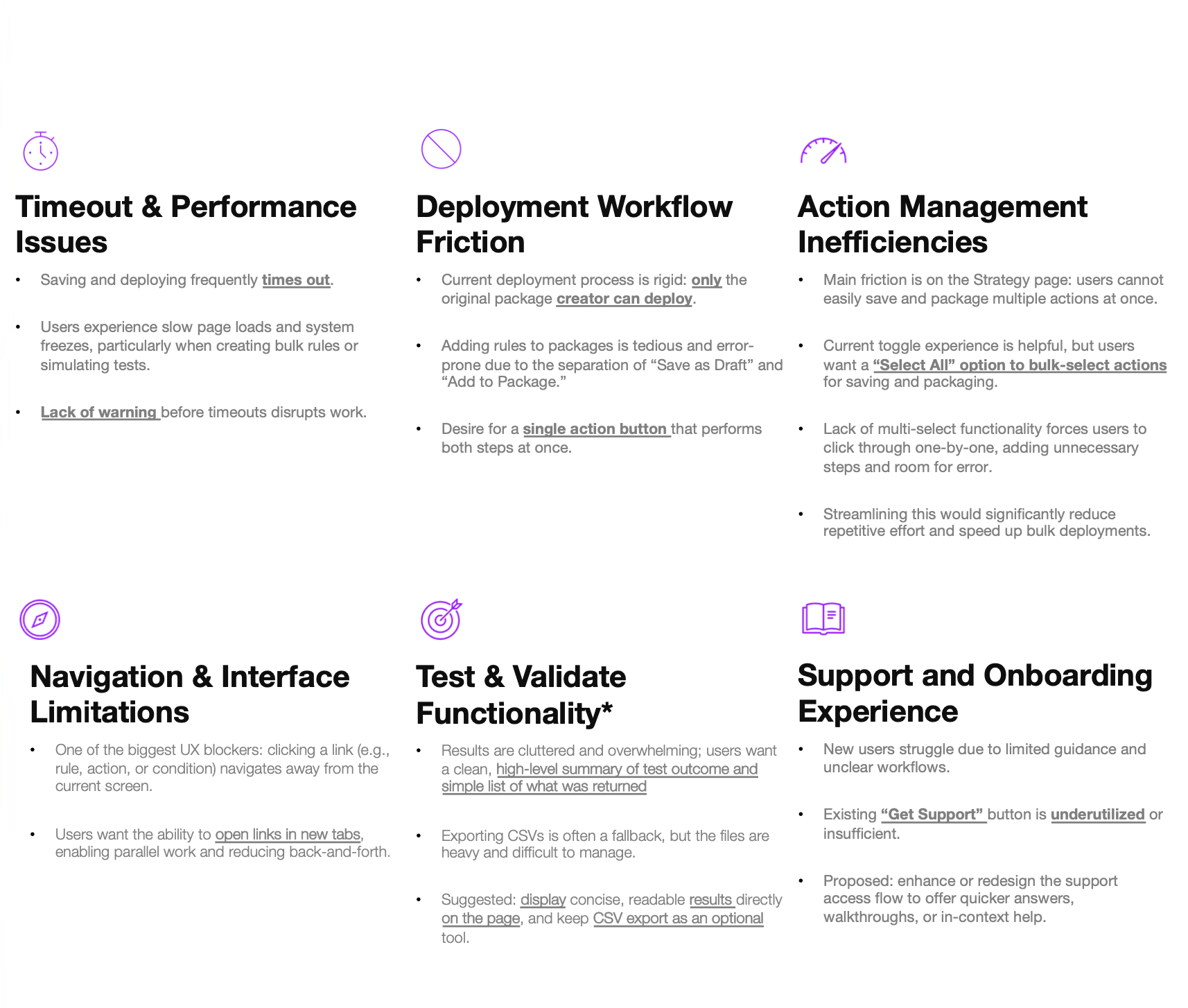
Based on direct user quotes and synthesis, I identified six high-impact UX problem areas EDE UX User Feedback:

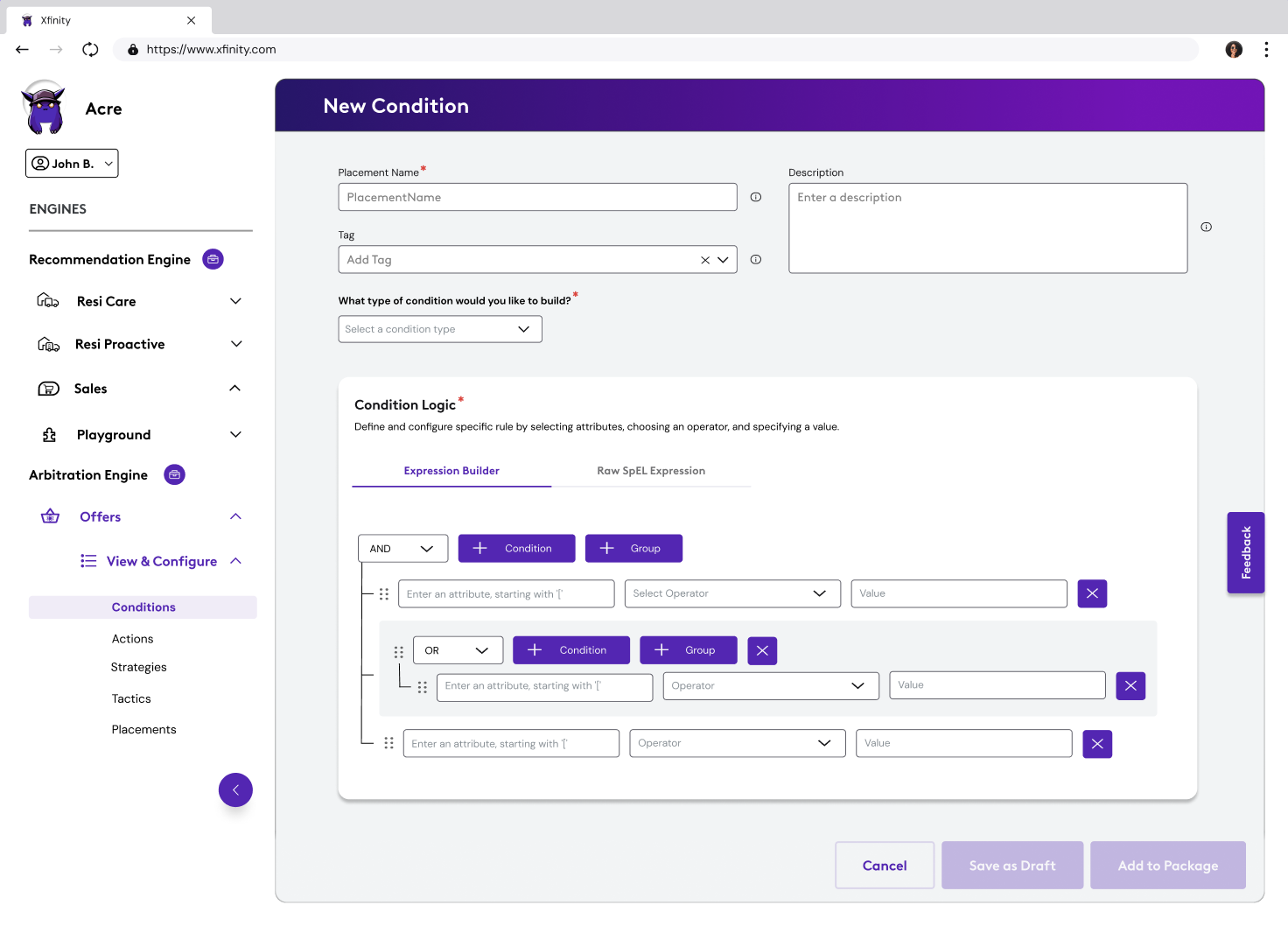
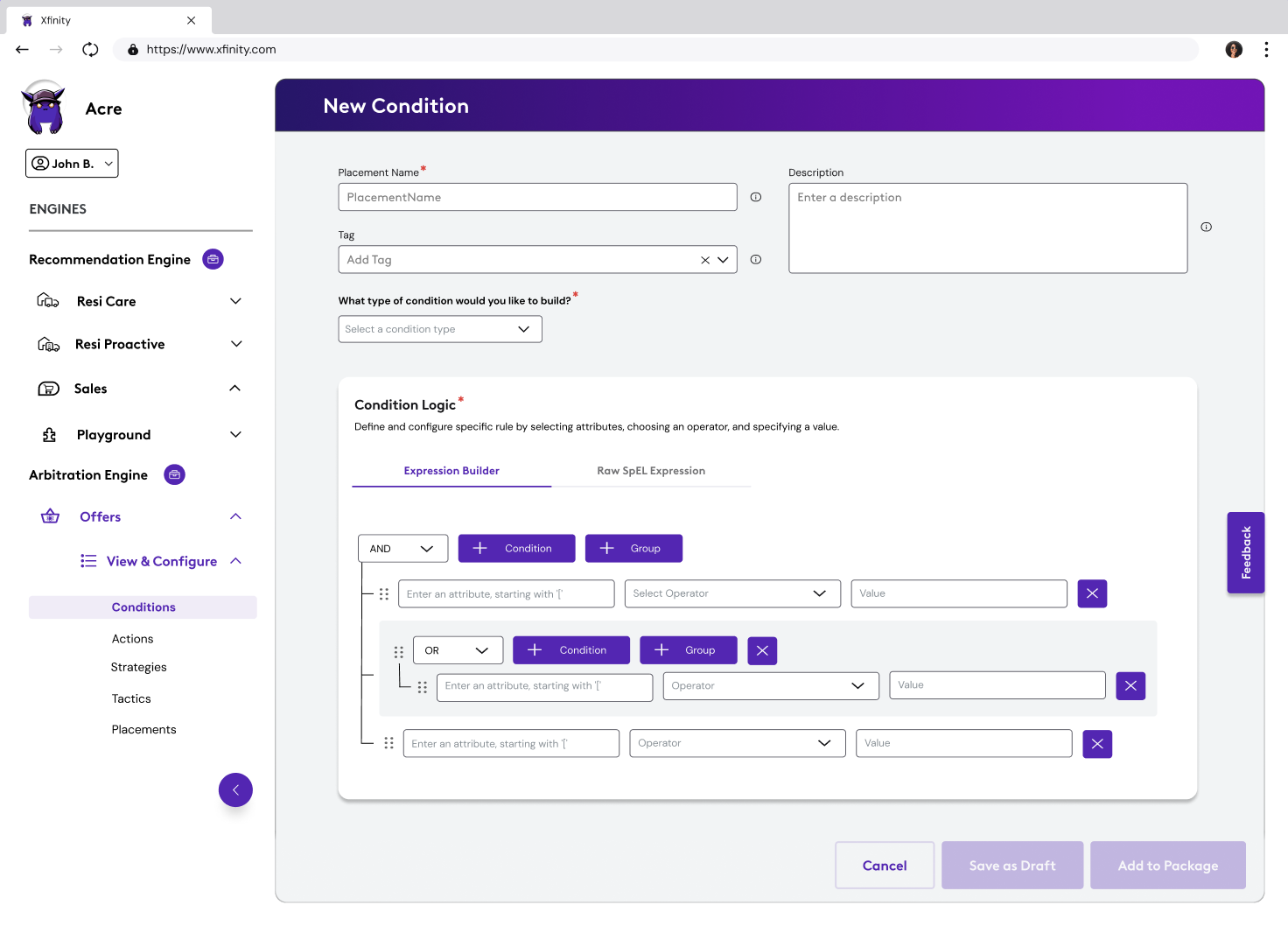
New Condition Detial Page with React Query Bulder Design
1. Deployment Workflow Friction
Only the original package creator could deploy
“Save as Draft” and “Add to Package” were separate, error-prone steps
Users explicitly requested a single, combined action
UX Impact: Increased errors, blocked collaboration, slower releases
2. Test & Validate Experience
Test results were cluttered and overwhelming
CSV exports were used as a workaround but were heavy and inefficient
Users wanted clear, high-level summaries inline
UX Opportunity: Build trust through clarity, not raw data
3. Action Management Inefficiencies
Strategy page forced one-by-one action management
No multi-select or “Select All” functionality
Bulk work became slow and error-prone
UX Opportunity: Reduce repetitive effort for power users
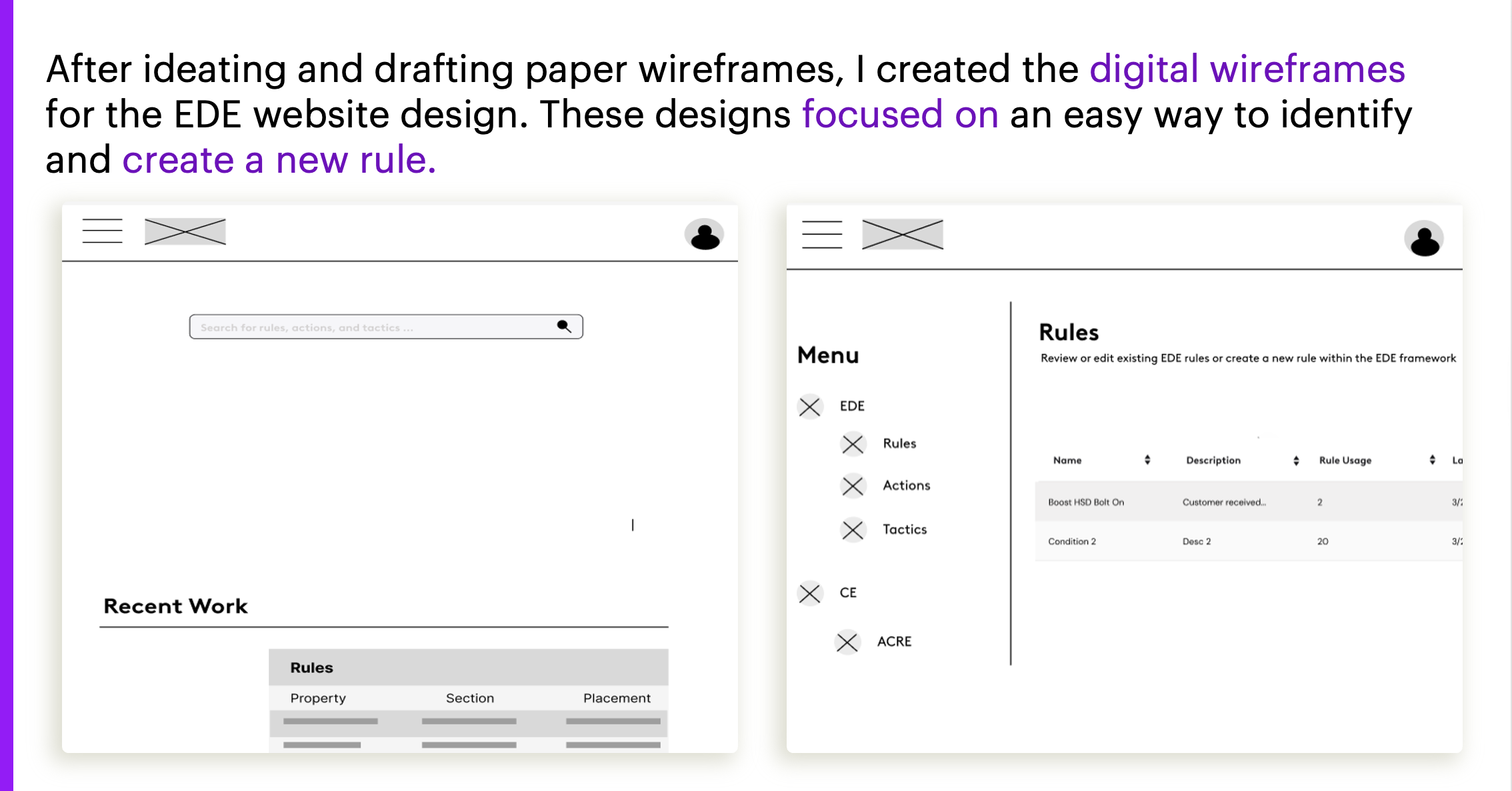
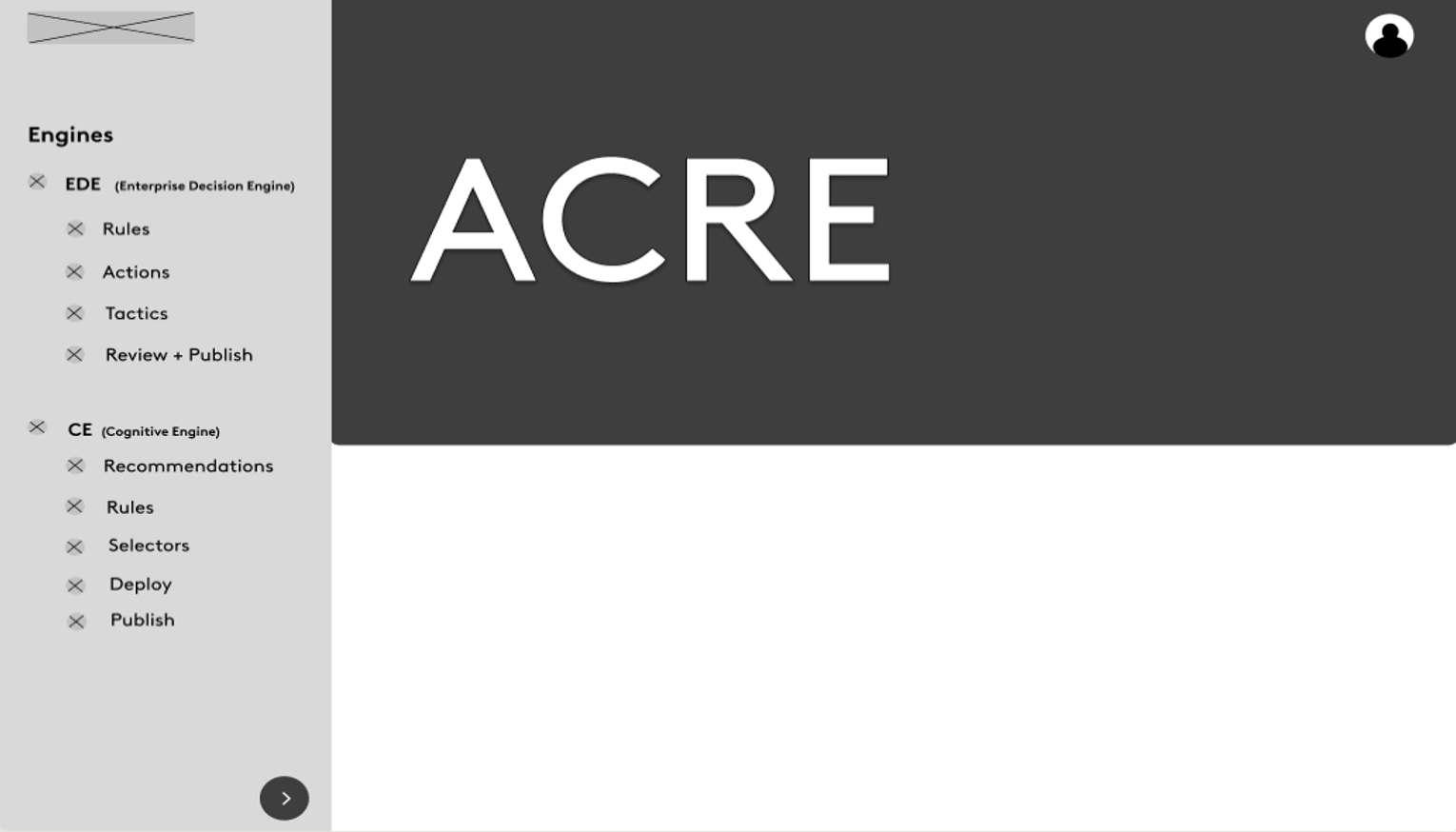
Digital Wireframe
High Fidelity Prototype
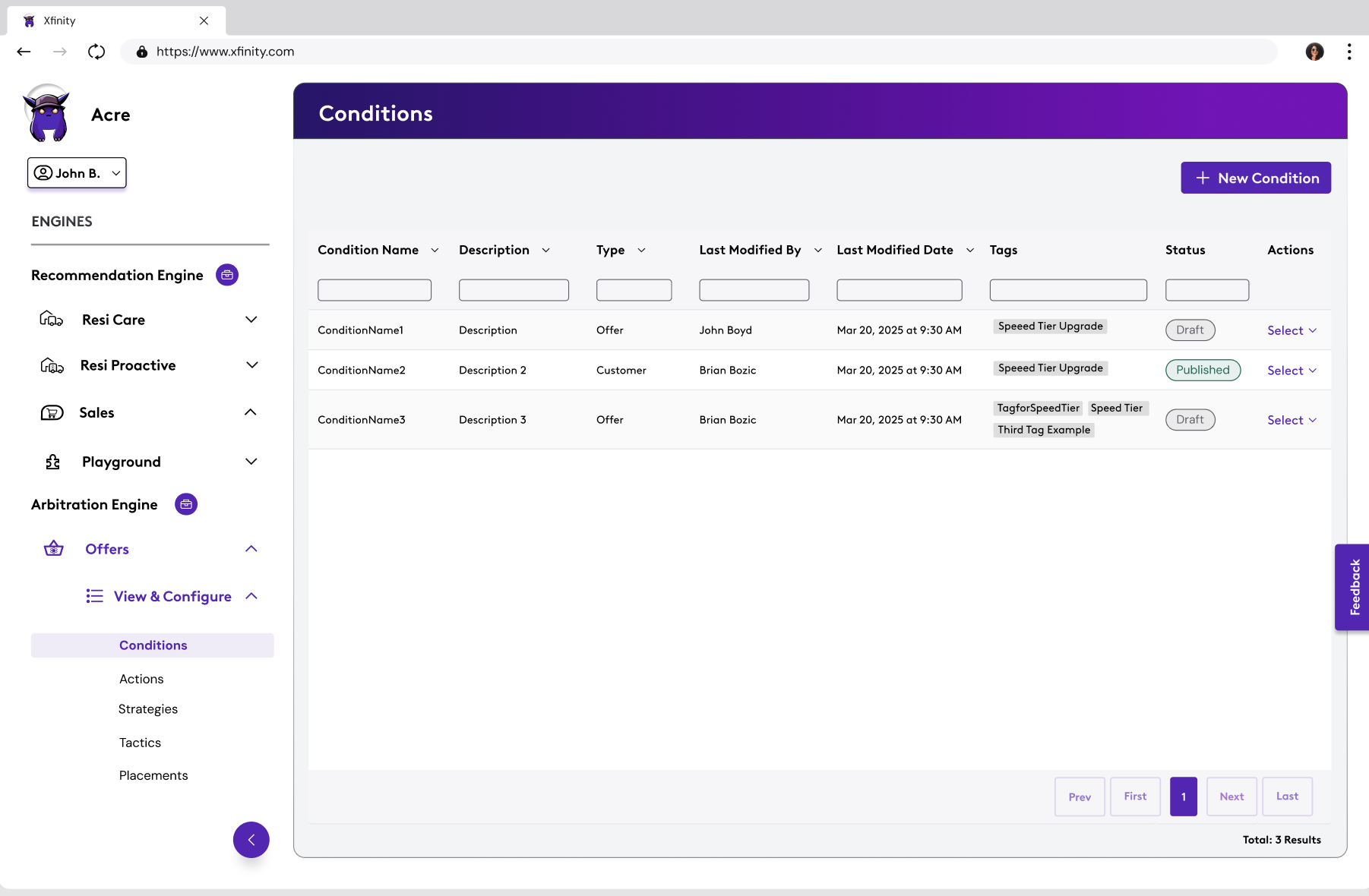
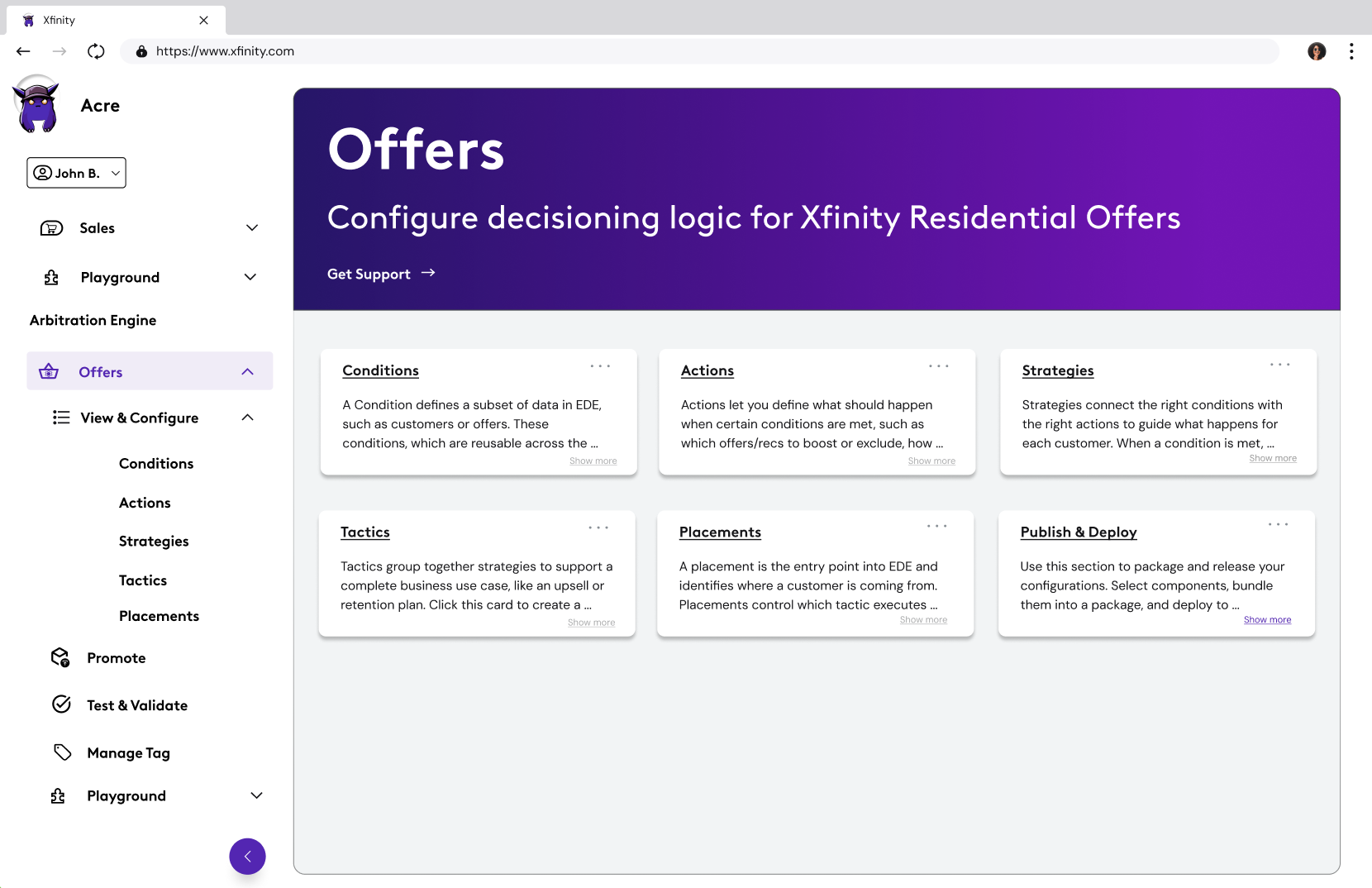
Condition List View Page design in Figma
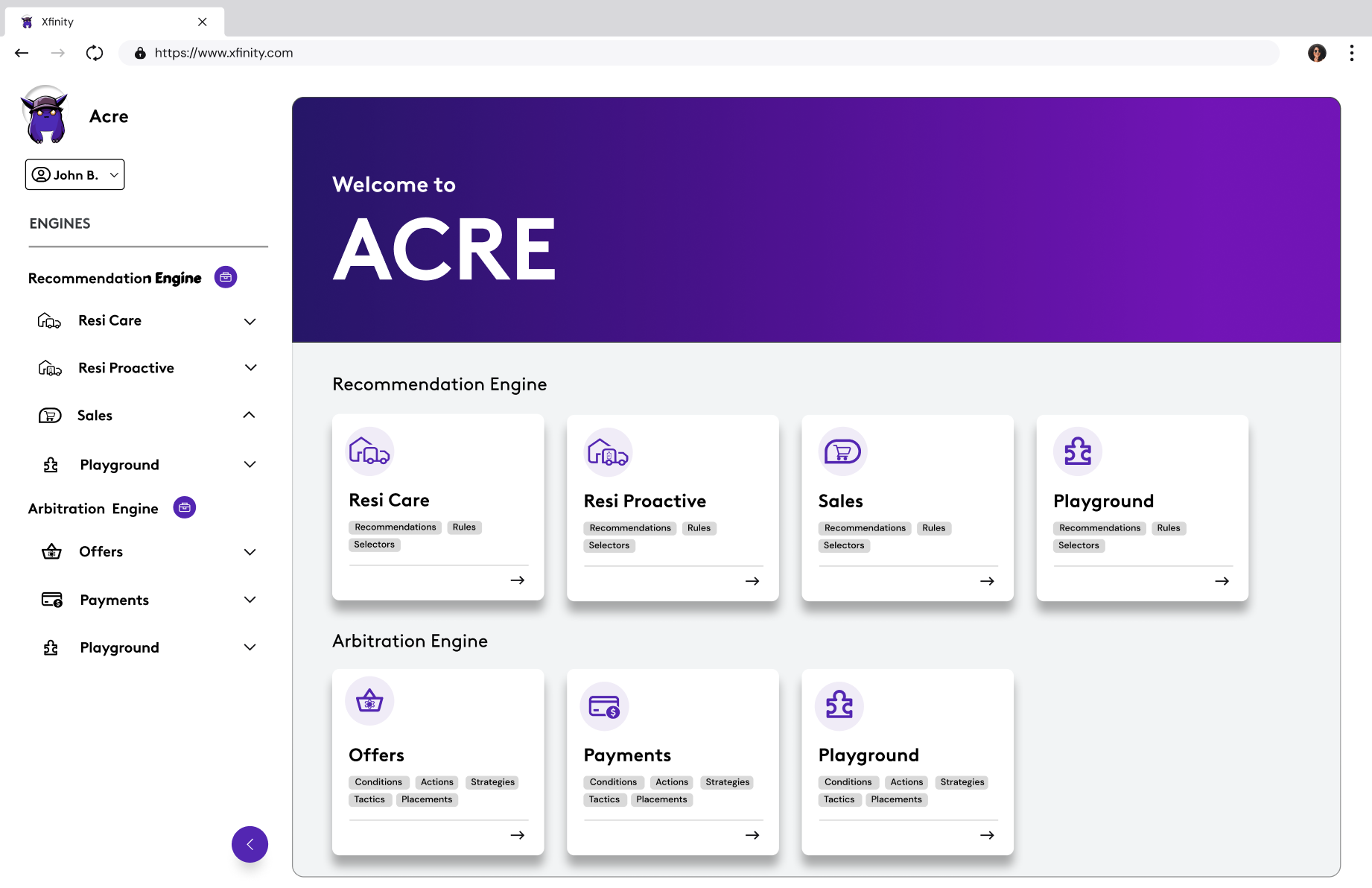
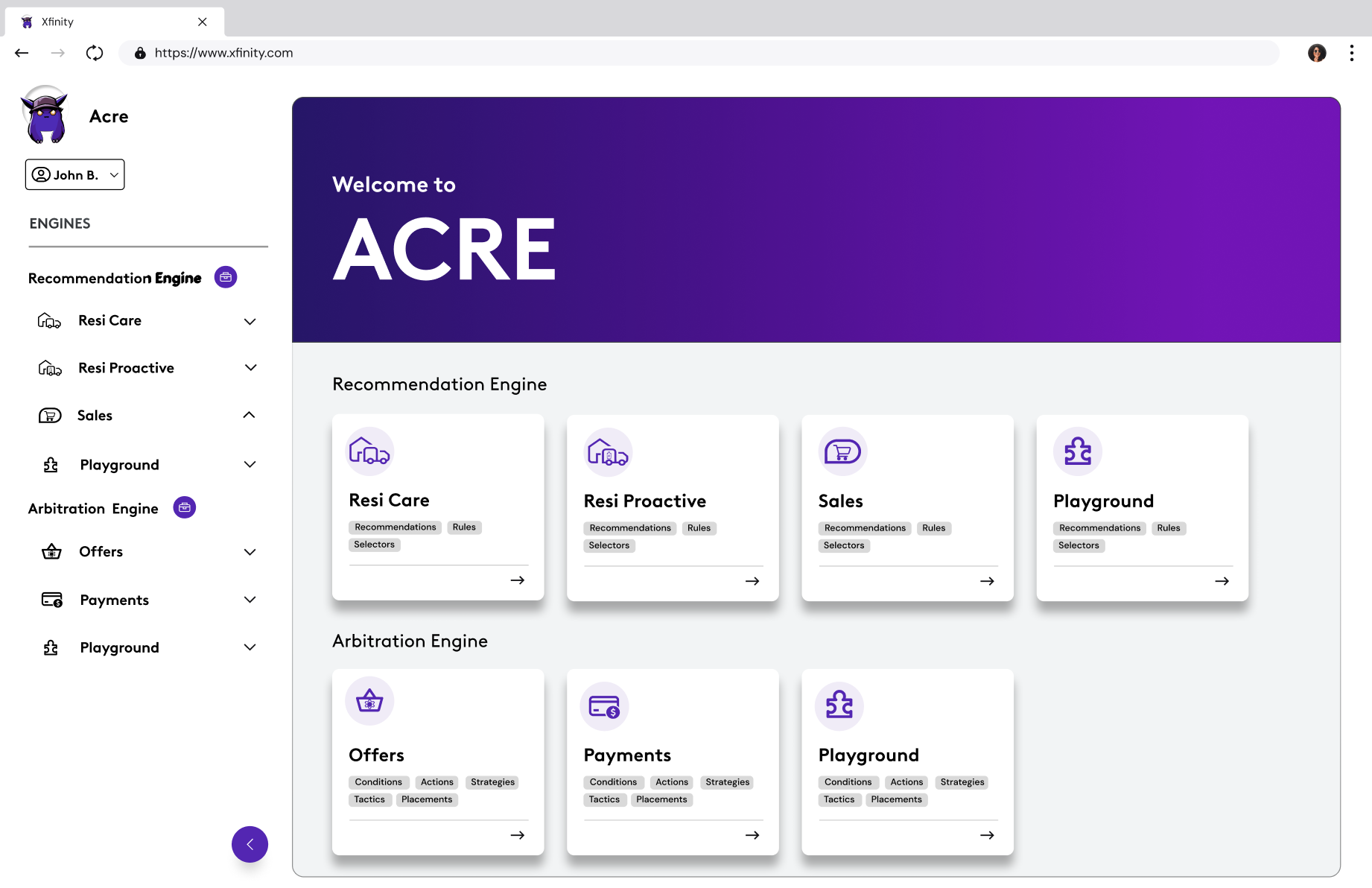
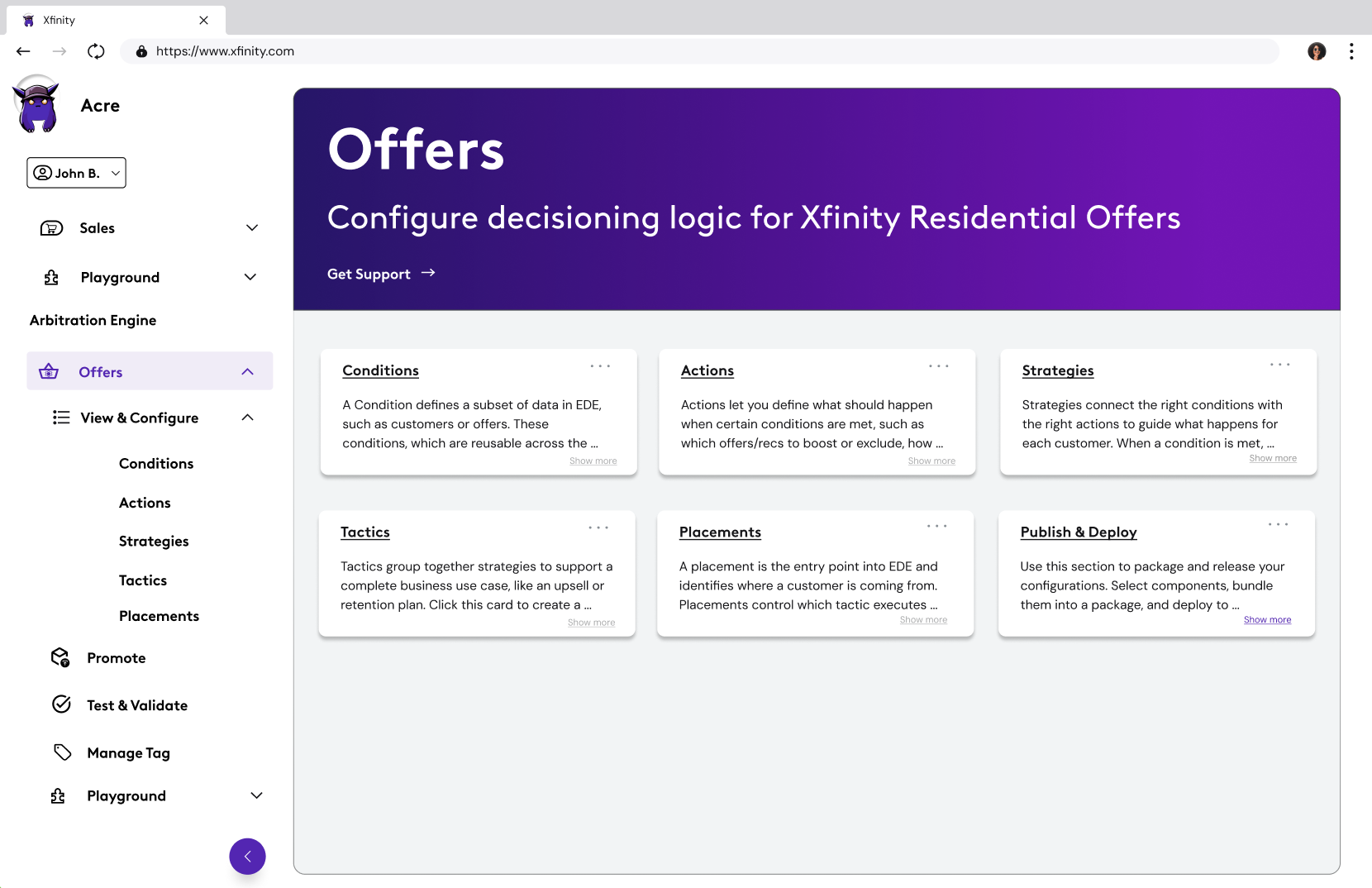
Offers Homepage
KEY INSIGHTS
With real-world usage, several truths became clear:
UX clarity directly impacts engineering efficiency and deployment velocity
Enterprise users value speed, transparency, and control over visual novelty
Navigation patterns must support parallel, expert workflows
Governance and autonomy must coexist
These insights informed both design decisions and prioritization conversations with product and engineering.
DEFINING & ITERATING THE 0→1 USER JOURNEY
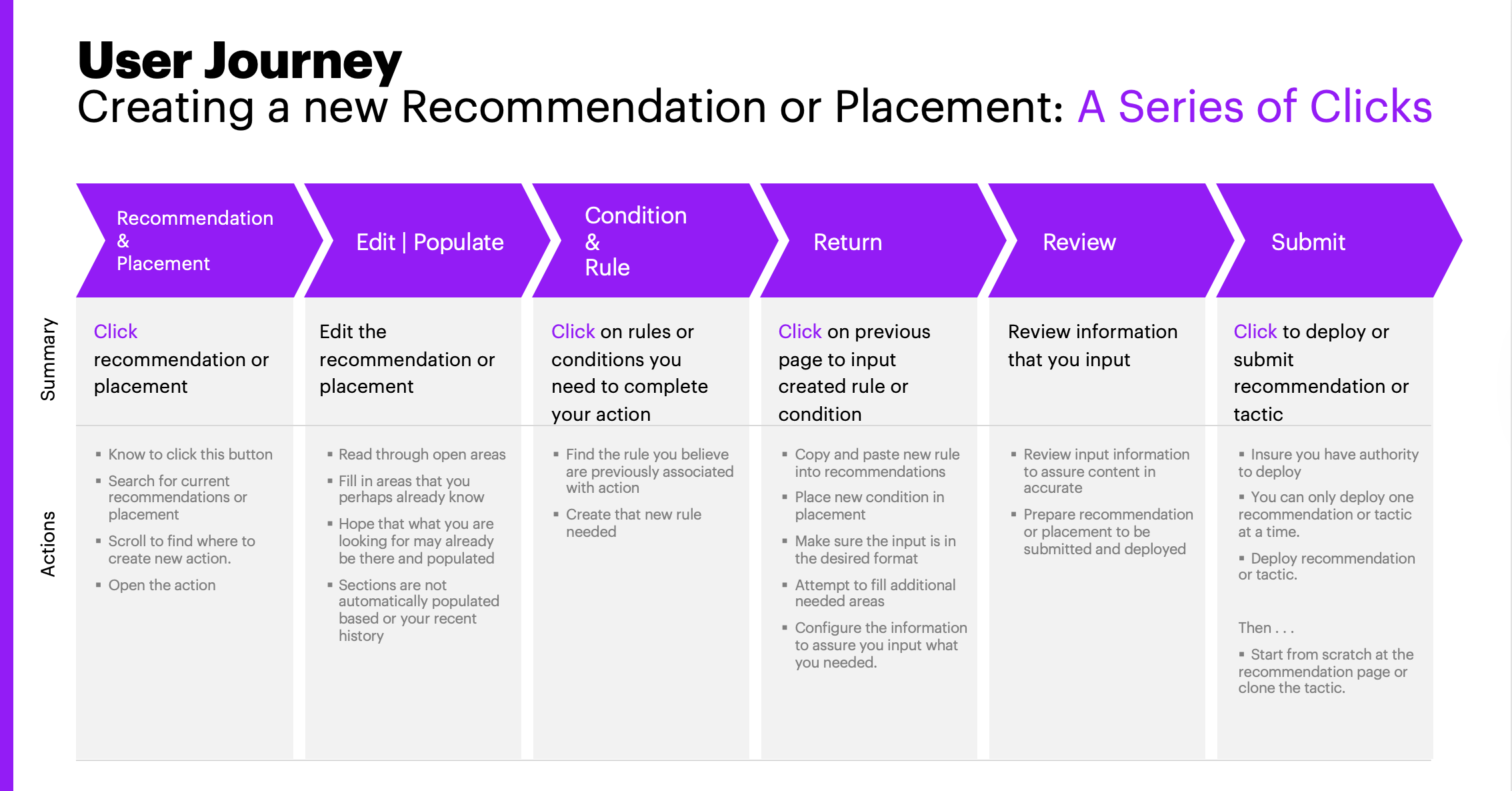
I defined and evolved the EDE journey:
Create recommendations or placements
Define and edit rules inline
Test and validate outcomes with clear summaries
Package, deploy, and iterate efficiently
Each phase was refined using direct user feedback, ensuring the system scaled with real usage patterns
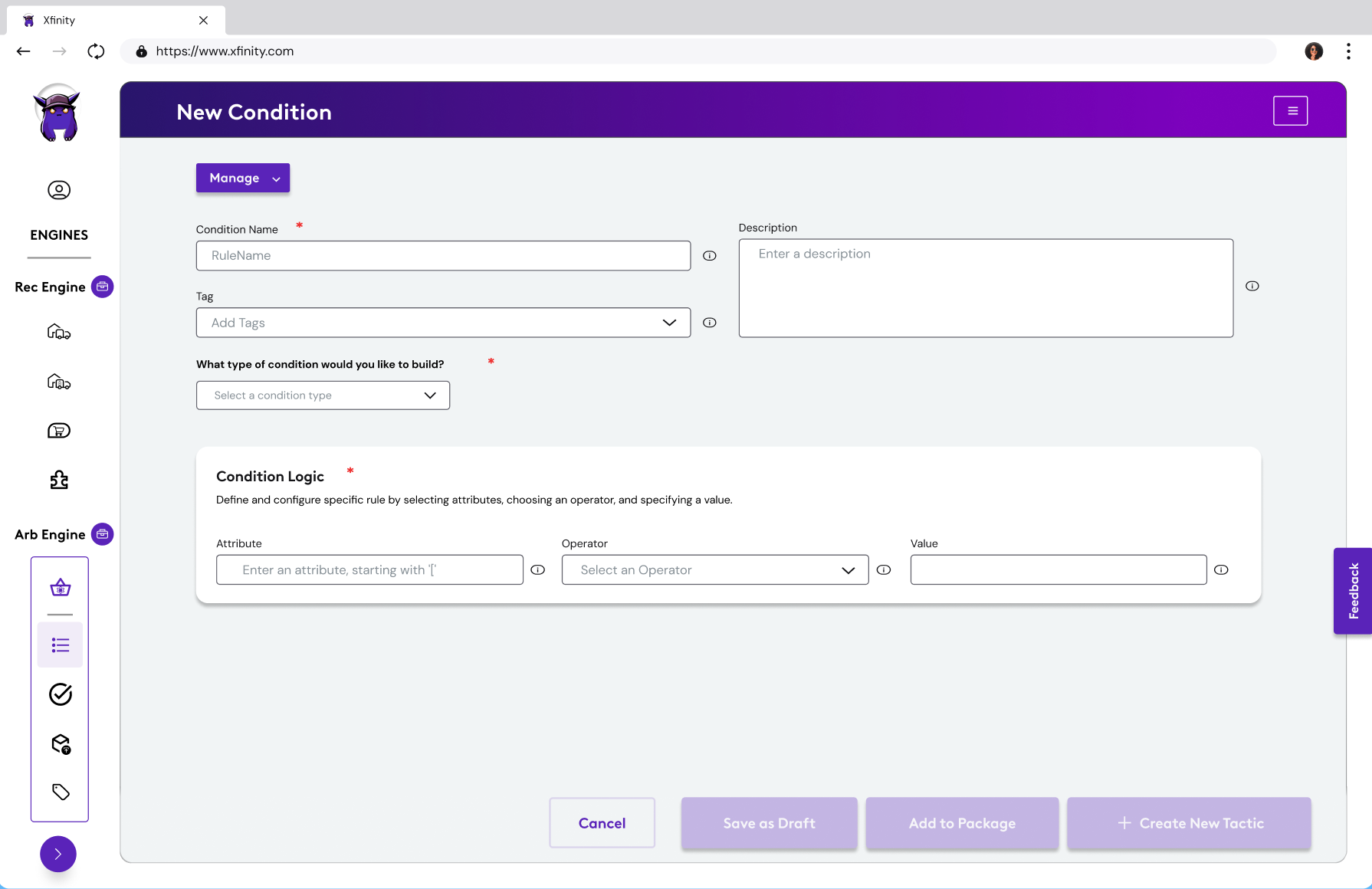
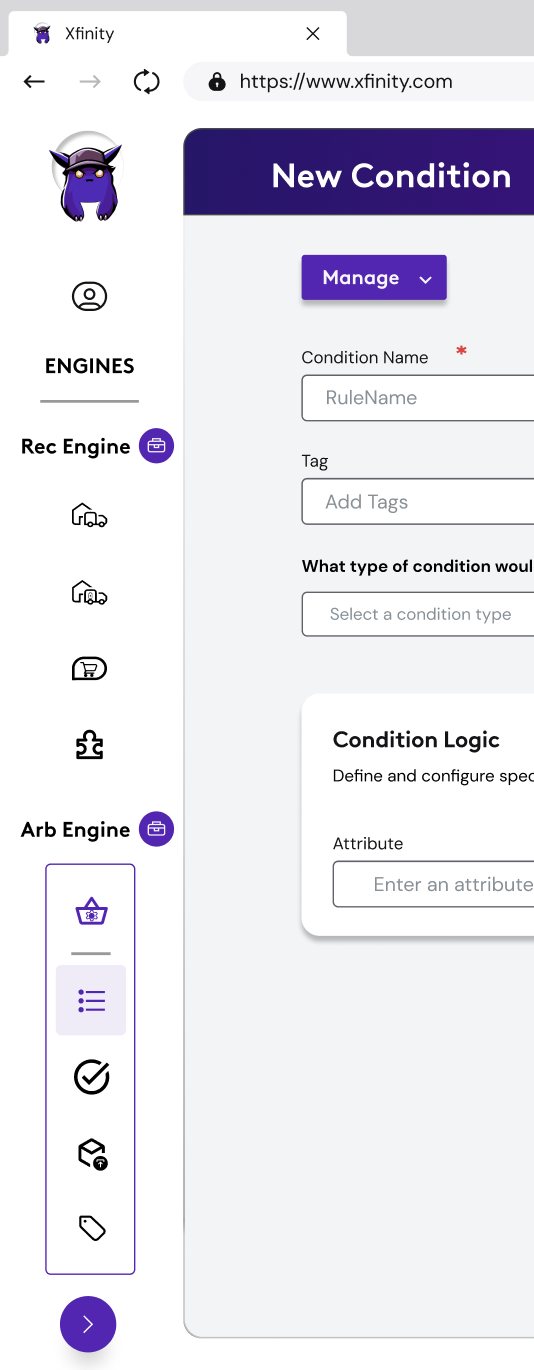
New Condition Detail Page without React Query Builder design and featuring collapsed left navigation
UX EXCELLENCE & SCALABLE SYSTEMS
Beyond screens, I improved team execution by introducing:
Story creation frameworks clarifying UX intent and acceptance criteria
Scalable design review processes to reduce rework
Continuous collaboration with engineers to balance UX improvements with performance constraints
This elevated the operational maturity of UX within the EDE program.
USABILITY & FEEDBACK SIGNAL
Users consistently rated the experience positively, while offering actionable improvement areas:
“Overall, it’s actually pretty easy to create the rules.”
“You guys are very quick to implement changes, not dismissive.”
Performance and deployment remained the largest blockers, not comprehension.
IMPACT
This work:
Defined the first EDE UX foundation at Comcast
Enabled non-engineers to author and manage decision logic
Reduced friction in testing, packaging, and deployment workflows
Created a feedback-driven UX model for enterprise-scale systems
Directly contributed to my promotion to Senior Analyst, based on leadership and impact
WHAT I LEARNED
Designing EDE from 0 → 1 → scale taught me how to:
Lead UX in ambiguous, high-stakes enterprise environments
Use qualitative feedback to drive roadmap influence
Design systems that balance governance, autonomy, and performance
Earn trust with senior stakeholders through clarity and follow-through
NEXT STEPS
Continue performance-focused UX improvements
Improve onboarding and in-context support
Measure success through adoption, speed, and error reduction
SOLUTION
I led the 0 → 1 UX definition and iteration of the EDE platform, owning discovery, workflow design, usability validation, and stakeholder alignment.
The solution established:
The first end-to-end EDE authoring experience
Accepted workflows for creating, testing, packaging, and deploying rules
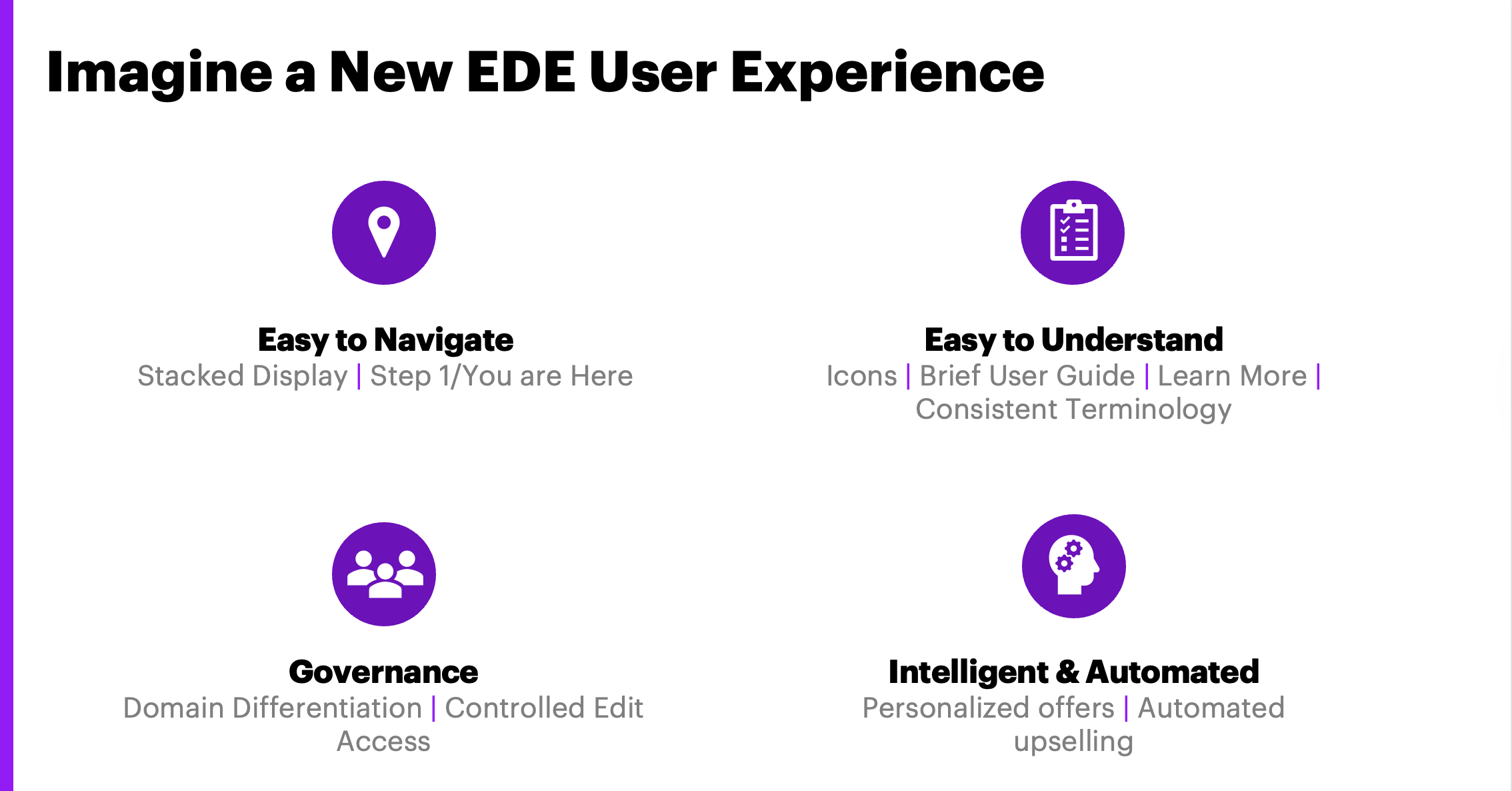
Governance and domain differentiation patterns
UX foundations for intelligent recommendations (ranking, timing, personalization)
Scalable, low-code interaction patterns
Critically, I also operationalized continuous user feedback loops, ensuring real user pain points directly shaped product decisions.
Key inflection point:
Following a user feedback readout, Comcast leadership requested that I formalize and lead recurring UX feedback sessions to be reviewed at the start of each quarterly planning cycle, elevating UX research from ad hoc input to a strategic planning artifact
4. Support & Onboarding Gaps
New users struggled to understand workflows
“Get Support” was underutilized and insufficient
Users wanted in-context guidance and walkthroughs
5. Timeout & Performance Issues
Saving and deploying frequently timed out
Page freezes during bulk actions or simulations
No warnings before timeouts disrupted work
UX Role: Surface system states clearly and reduce uncertainty
6. Navigation & Interface Limitations
Clicking rules or actions navigated users away from their current context
Users explicitly requested links opening in new tabs to enable parallel work
This was cited as one of the biggest UX blockers
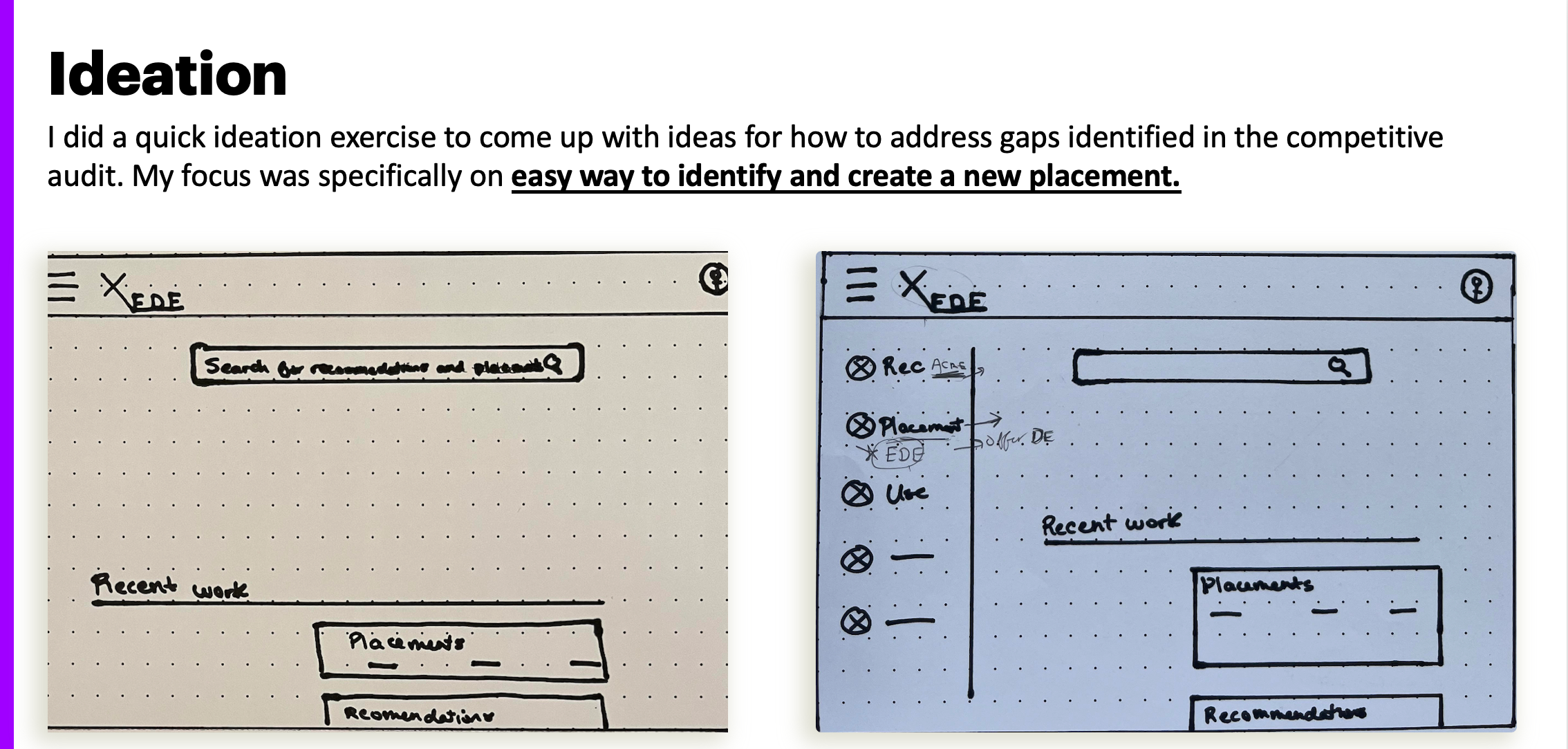
Paper Wireframe
Low Fidelity Prototype
STRATEGIC LEADERSHIP & CLIENT TRUST
As EDE adoption grew, I became a trusted UX lead across design, product, and engineering.
Led cross-functional UX efforts across discovery, design, validation, and sprint planning
Regularly facilitated stakeholder alignment sessions to clarify scope, tradeoffs, and success metrics
Presented synthesized user feedback to Comcast leadership